Get started
 Log in
How to Use a Standards-Based Gradebook for Different Grading Methods
|
Kaylie Wiedmeyer Edtech Thought Leader |

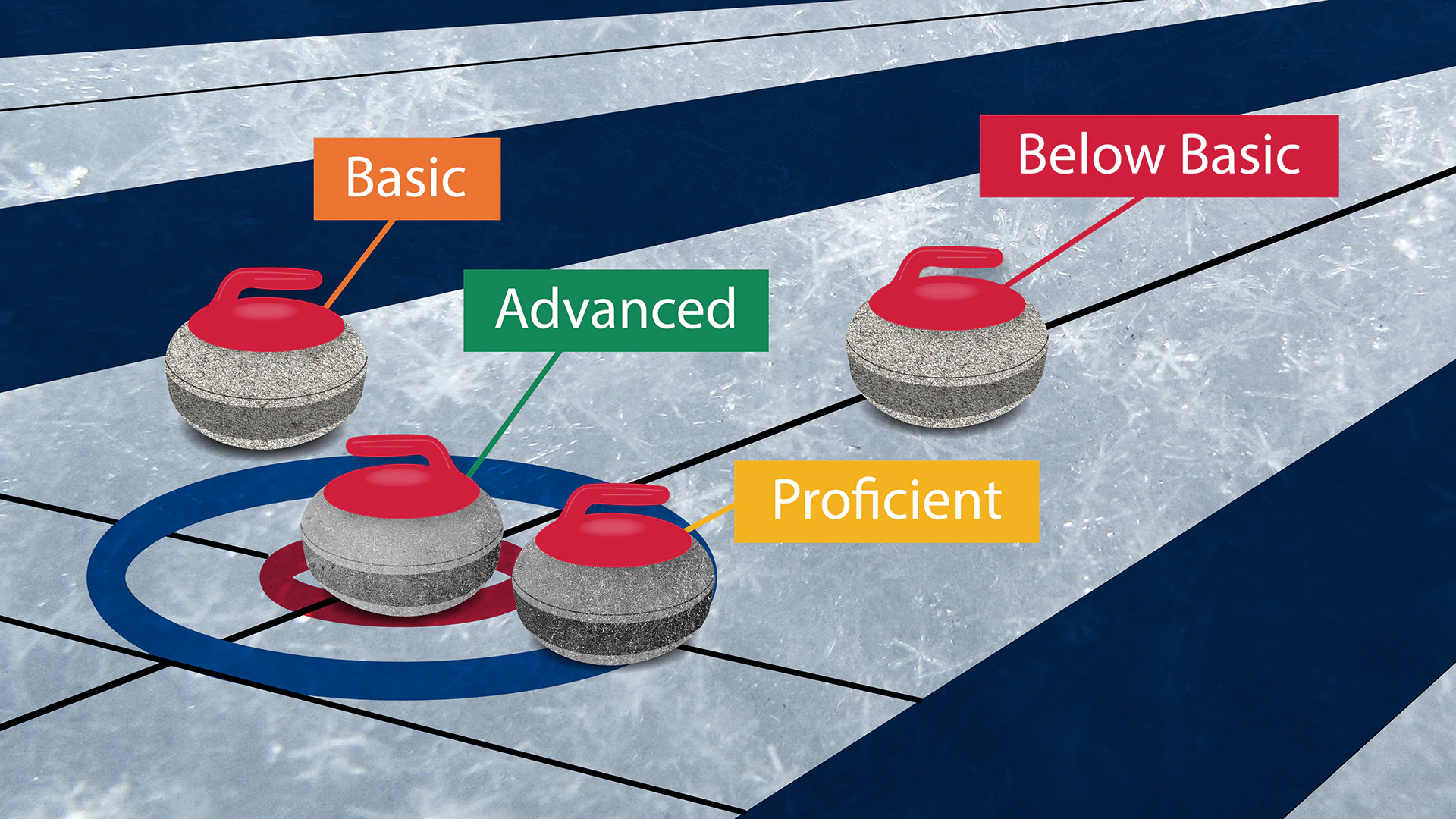
Traditional grading can be a good way to measure academic mastery, but it often doesn't give teachers the flexibility and visibility they need to adequately communicate exactly what each student has mastered and has yet to master.
With a standards-based grading (SBG) approach, teachers can choose from a range of grading methods that offer more dimensionality than a typical A-F grading scale. While the historically used A-F scale produces letter grades by calculating points earned out of points possible, standards-based grading methods offer a variety of ways to report students' proficiency. With approaches like growth-oriented, competency-based, evidence-based, mastery-based, standards-referenced, standards-based, and more, districts can measure students' progression using methods like trend scoring, proficiency tiers, and artifacts (quizzes, assignments, portfolios, etc.).
With SBG, teachers can more accurately assess and measure a student's learning: what they know, what they don't know, and the student's confidence in their own skills. With this increased visibility, teachers can more accurately fill the learning gaps for students in their classrooms.
Inside Skyward's Qmlativ, teachers can use a variety of SBG methods with the Standards-Based Gradebook:
Standards-based
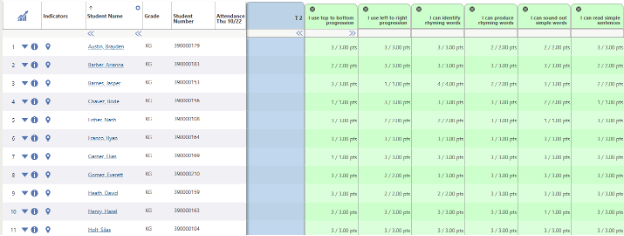
This method enables teachers to measure students' abilities with proficiency levels, where proficiency is typically listed as a lettered or numbered scale with individual standards on a report card. Inside Qmlativ, teachers can differentiate between Formative and Summative assignments and evidence, provide feedback for any assignment, add student notes, and use grading period comments to communicate clearly. Assignments can also target one or more standard while keeping grading separate for each.
Example image:
Standards-referenced
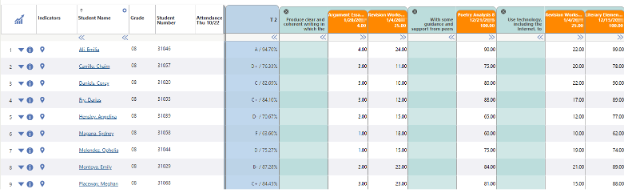
An approach that blends SBG with a traditional grading approach by incorporating percentages or the traditional A-F scale to measure a student's average proficiency of their grade level across individual proficiency tiers. Inside Qmlativ, Academic Standards can be easily added to a course via the calculation group, assignments can be aligned to one or more standards, and traditional scoring and grading options are readily available.
Example image:
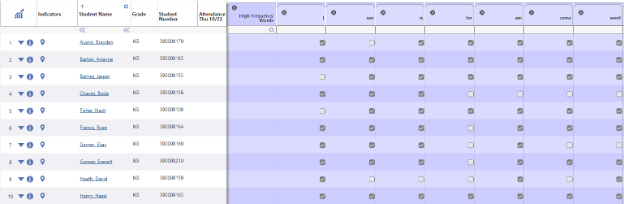
Mastery-based
This method assesses whether a student has mastered a particular standard or skill, often using rubrics to communicate what has been learned or demonstrated through coursework, and what hasn't. Inside Qmlativ, teachers can use mastery options in the Calculation Group, demonstrate additional attempts with the scoring feature or assignment cloning, and attach rubrics to master-standards and assignments.
Example image:
Competency-based
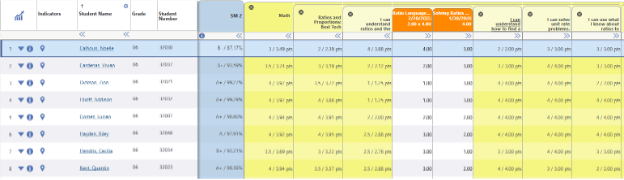
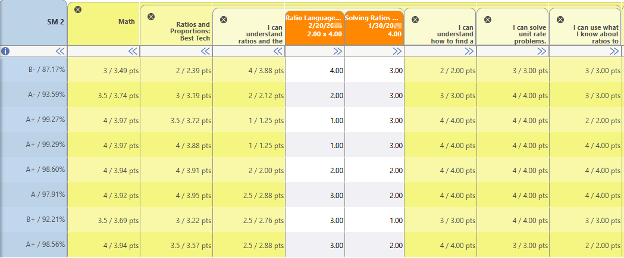
This approach takes mastery-based grading and explores the skills, knowledge, and ability students need to demonstrate to reach proficiency in more depth. Inside Qmlativ, teachers can include proficiency or mastery options at tier 1 competency, use color-coded grading options to visually identify that proficiency has been met, and use Student Grouping to differentiate or individualize learning.
Example images:
Growth-oriented
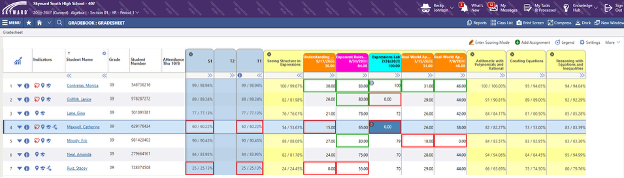
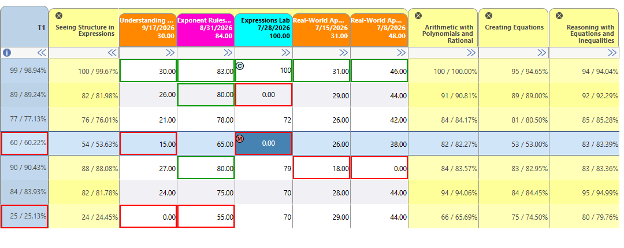
Using a growth-oriented method employs trend scoring to take into account students' most recent work more than past work. This method assesses individual progress in relation to their own learning trajectory rather than a final report card featuring a one-size-fits all standard. Inside Qmlativ, teachers can use Power Law and Decaying Average to calculate scores, differentiate students using student groups, and use colors to define when students achieve or don’t achieve a certain grade mark or percentage. They can also add student comments to provide feedback.
Example Decaying Average images:
Evidence-based
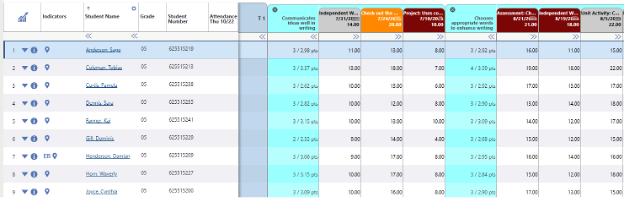
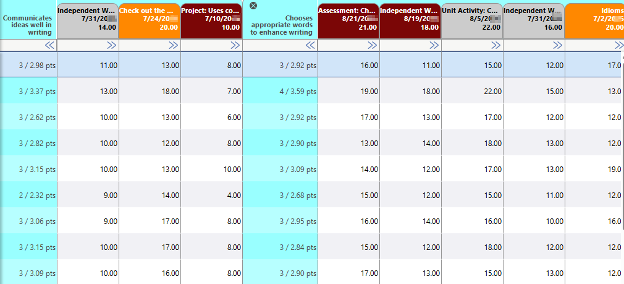
Students submit work to demonstrate skills mastered. Teachers use evidence (quizzes, assignments, portfolios, etc.) to assess whether a student has mastered certain course content. Inside Qmlativ, categories can be used to distinguish between types of evidence. The gradebook also offers a wide range of calculation options, including subjective and Recency grading using Power Law and Decaying Average.
Example Power Law images:
Skyward's Standards-Based Gradebook provides a range of flexible tools for districts to incorporate into SBG methods, from student groups, attachments, and grade period comments to Power Law, subjective grading, and cumulative assignment score weighting. As a result, districts are empowered to use diverse grading approaches that provide teachers, students, and parents with the information they need to understand a student's academic progress.
Want to learn more about alternative grading approaches?
Thinking about edtech for your district? We'd love to help. Visit skyward.com/get-started to learn more.
|
Kaylie Wiedmeyer Edtech Thought Leader |