
 Get started
 Log in
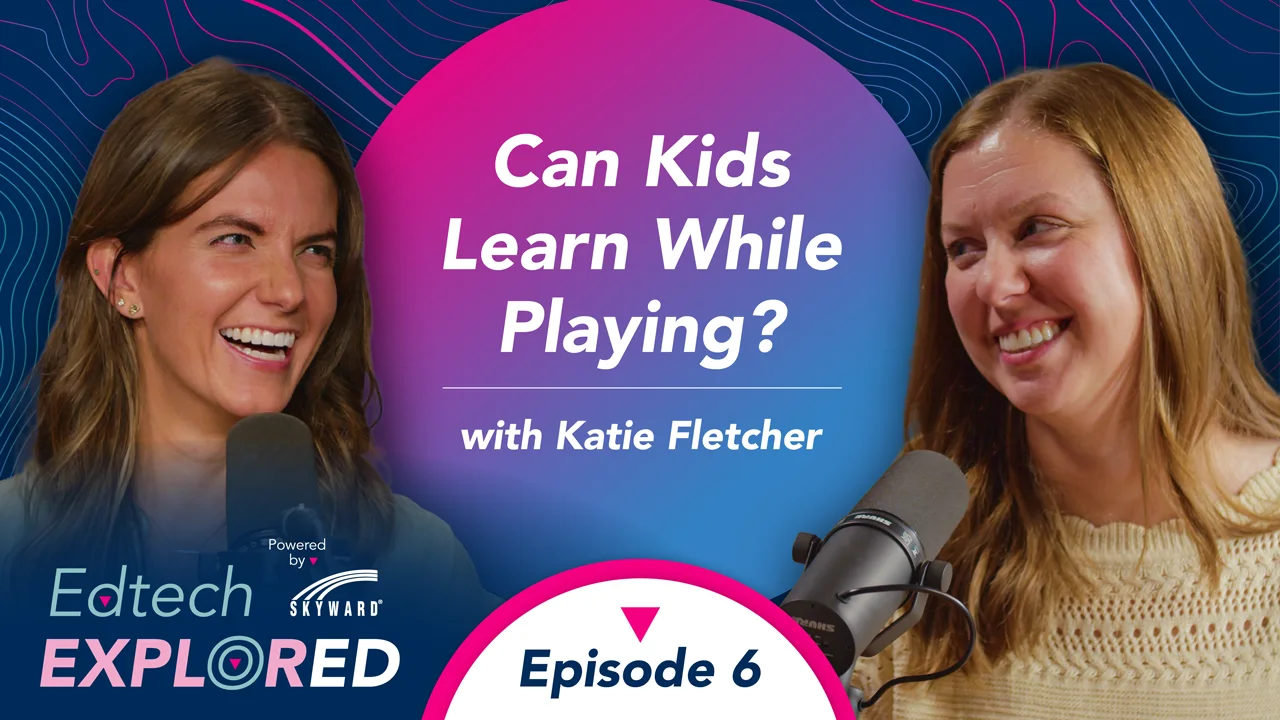

Can Kids Learn While Playing? (ft. Katie Fletcher, 4K teacher)
In this episode of Edtech Explored, Lauren and Erin sit down with 4K teacher Katie Fletcher to discuss one of the biggest misconceptions in education: that play and learning are opposites. They explore what play-based learning really looks like in today's classrooms, and why it's an important part of a child's development.
Transcript
Lauren: In a world obsessed with test scores, academics, and credentials, why would teachers recommend starting formal education with teaching kids to play? That's what we're diving into today. Welcome to EdTech Explored, where we chat about all things edtech. What's working, what's changing, and what educators need to know to stay ahead. I'm Lauren, and as always, I'm joined by my co-host, Erin, and today we have a very special guest with us. We have my cousin, Katie, who is a play-based 4K teacher in the Pacelli Catholic School System. Welcome to the show, Katie.
Katie: Thank you. I'm excited to be here. I could talk about play-based learning all day, so you're gonna have to cut me off.
Erin: Well, we're not going to be cutting you off for sure because I think we could talk about play-based learning all day, too. But just pre-K life, those golden days. What were those like for you, Lauren?
Lauren: I feel like one of my memories that I really have is painting and getting to put the smoks on and doing painting. And I yeah, that's that's one of my core memories for me. But how about for both of you?
Katie: I remember I went to half day kindergarten and I just remember there being lots of blocks and recess playing with other kids, lots of fun themed days. Um and then I go home in the afternoon and sleep and play with things at home.
Erin: And you were probably exhausted. Yeah, I had a half day kindergarten as well. And my teacher's name was Mrs. Schmees and she had a teepee in her classroom with like a bear skin. So, I remember that and then we also had gerbles, salt and pepper. So that was my introduction to school. I mean is has it changed? Is it different?
Katie: In many cases, yes. It's very different.
Erin: Okay. Interesting. So what is a typical school day in your typical pre-K kindergarten?
Katie: In my classroom it is a full day 4K. So they're there with me all day. Um, when I came into this position, I thought, gosh, I don't know that four-year-olds need to be at school all day, right? So, I thought my job is to make it as developmentally appropriate for a four-year-old as I can. Um, so I have three kids of my own, and I always think of it through the lens of I want to create an environment that I want my own child to be in.
Lauren: I love that. Yeah.
Katie: Right. Because that's what childhood is all about. You want to be in an environment that feels safe and happy and that you have the freedom to explore and learn and things like that.
Erin: And so for many children, would that be a developmentally appropriate day to fill it with play?
Katie: Yes.
Erin: Okay.
Katie: There's been a huge push to push academic rigor. Right. We hear that word rigor all the time, right? You know, I think young kids have the capacity to learn these academic skills, these complex academic things like, like they're learning to read and write and they have that capacity, but I think we need to look at what our methods are to teach those things and make our methods match their developmental levels.
Lauren: So, we all know what play is, but for people who aren't familiar with the concept of play-based learning, no pun intended, but explain it like I'm five. What is play-based learning?
Katie: Like you're five. All right.
Erin: She's putting on her teacher voice.
Katie: No. So, play-based learning is pretty much exactly what it sounds like. Um, if I'm a teacher, I'm going to teach a concept. I'm going to do my best to make sure that the way I'm introducing it and the way that we're practicing it is hands-on and through play.
Erin: Has that always been your approach or is this something that you've kind of slowly emerged into?
Katie: This is my third year teaching 4K and before that I taught 12 years of kindergarten in um the public schools big district. Those environments were not very conducive to play-based learning. There was so much testing and academic rigor, right? I was getting burnt out, the kids were getting burnt out. Um, I was commuting far to get to that job. It got to a point where I just said, I need a change. So I applied for a job where I went to elementary school at Pacelli. Um and I was given the two options. Either I could teach first grade, or I could teach start this new 4K program, full day 4K, right? And I would have had the freedom to create the program however I wanted. And I was going back and forth because I was coming from kindergarten and I thought, "Oh gosh, it'd be nice to have some more independence and go to first grade, right?" And I've got to give my husband some credit on this one. Okay. Um he said, "Are you kidding me? You're literally wearing a shirt right now that says playing is learning. Like you were meant for this. Go for the 4K." So I did. And it's been great because I do have the freedom to create the program how I want it to be and make it developmentally appropriate.
Erin: So, do you work with other early childhood educators then, and you're teaching them how to implement play-based learning as well?
Katie: I try really hard.
Erin: Yeah.
Katie: Yeah. I try to get my colleagues to incorporate play as much as they can. You know, change is hard for everyone, right? there was this huge shift away from play into um more academic rigor. There it is again, right? Um but like I said, these kids have the capacity for the academic skills, but we need to change how, what our methods are to teach them. You know, there's that saying, you do the best you can until you know better and then you do better. So, we're doing the best we can and now we're seeing that we need to shift our instructional methods and so it's time.
Lauren: So, it sounds like the kids are having so much fun in your classroom. Why would other teachers not want to implement a play-based classroom or what misconceptions might be preventing them from taking that approach?
Katie: I think people think it's chaos. Like, they think that sounds like chaos. Um, you know, it can be, but I like to say it's controlled chaos because at least in my classroom, we spend a lot of time learning the expectations. They know exactly how to take care of the materials. Um, you know, they have freedom of how they're using the materials, but they learn to be respectful of my things, right? Um, how to clean up different. We talk about voice level a lot. So, it's not loud all the time. Um, now it can be chaotic. It can be messy. I like to say all the time, kids are washable. Like, I say that all the time. Someone's going to like embroider that on a cushion for me.
Erin: You need that t-shirt.
Katie: Yes, I do need that t-shirt. Kids are washable. I tell the parents that, too. If there's something that we're going to do that's um learned best through something that they might get messy, we're going to do it. Sorry.
Erin: Yeah.
Katie: Um but for other teachers, it doesn't have to be like that, right? Start small. Start with something that you're comfortable with. Uh we talked about if the kids learn from me how to make mistakes, they're going to tell if the teacher is not comfortable with them having exploring materials and things, they aren't going to be comfortable and they won't be comfortable making mistakes. So start small. Look at if you're tempted to copy off a worksheet, think, is this really the best way to teach or practice this skill that I want them to learn? Is there something that I can do that's hands-on um or interactive instead of this worksheet? Start small. Start with what you're comfortable with.
Erin: That's awesome advice. And it hearkens back to in previous uh we've talked a lot about outdoor education. And so that's one of the things the misconceptions or the things that people have to be careful about is kids will try to sort of go wild. And so that can really be a barrier for teachers trying to start this out. So I really loved what you said about like do what you're comfortable with so that you can be that calm presence for your whole classroom. Um another thing that I just loved when you said was, is this the best way for them to learn it? I didn't hear, “is this the best way for me to teach it?” I love that perspective. That's very child focused. Um, is that something that you've developed over your career or is that something that just is you're made for the play-based classroom?
Katie: I think can I say both?
Erin: Yeah.
Katie: I think I always have this like creativity in me that wants to do more, right? Um, but I didn't start out that way in my teaching instruction because you learn from other teachers. You learn from, you use your curriculum that you're given because that's you follow the rules, right? Um, so a lot of it now is very scripted and it's easier, it's easier to teach it how it says in the manual, and also there's so much put on teachers plates that it's in order to make sure that you're covering what you need to cover. Like sometimes that's just the best route in your mind. It's the easiest route to make sure that you're covering all your bases.
Erin: Yeah, absolutely.
Katie: So, I've come from the worksheets, and there's still times when we'll do a paper in school because you know things like learning letter formation or writing numbers like.
Erin: That's one way to do it.
Katie: Yeah. Yeah.
Erin: So, can we back up for a minute and compare and contrast? So that typical kindergarten that maybe isn't as play-based as you would like to see, what is a day like just real quick, what's that structure like?
Katie: Okay. So, in my past teaching experience, there was a block for reading, a block for math, um, you know, a block for writing with strict minutes that you have to get in very direct instruction, you know. And then they practice the skill. I felt like a lot of it was not the kids learning, but just trying to show that they could do something.
Erin: And were those kids expected to sit for long periods of time?
Katie: Yes.
Erin: Really?
Katie: Yes.
Erin: Okay. So, developmentally, how long is it appropriate to expect a child who is four to sit and get learning?
Katie: Um, I'm sure there's a number and I'm not sure the exact number, but in my classroom, I try for maybe 10 minutes and then we're up and learning. And you can learn by moving, too.
Erin: Yeah.
Katie: Right. We do moving songs that incorporate our content that we're learning.
Lauren: So, do you still have those blocks where it's like it's a reading block, it's math, it's Is that still part of the day where it is segmented in some ways like that or is everything kind-
Katie: We do.
Lauren: Okay.
Katie: Yeah, I kind of take a balanced approach to play-based learning like we know that there should be a big part portion of the day that's child choice. So, they're choosing their learning and it's really driven by them. Um, I think with our educational climate how it is now and because there are academic things that they need to learn, I take a balanced approach. So there are some things that kids I think learn best through direct instruction like phonics instruction, learning letters and letter sounds and helping them really like get that stuck in their head. So my lesson would be in direct instruction, but then the way that they're practicing that skill would be play-based and hands-on. Like we, for handwriting that doesn't mean that they need to be holding a pencil and writing the letter the whole time. We might make letters out of Play-Doh or draw them in sand. So they get their choice on how they want to practice making the letter.
Lauren: Yeah.
Erin: Okay.
Lauren: So then they feel involved too and not like they're just being told what to do all day, but that they get to choose.
Katie: Yeah. They're still learning like there's that piece of direct instruction of learning the correct letter sound, but then they're practicing on their own.
Lauren: And it sounds like they're having so much fun, too. So, for them, it's probably doesn't even feel like school, right? Like it's, they're having fun.
Katie: Yes.
Erin: Does it feel like academic rigor? So, a question for you, though. Sure. So, when teachers are facilitating play-based learning, how much is the teacher actually involved? What is your job while kids are playing and learning through play?
Katie: So during our free play time, I call it play workshop in my classroom and they get to choose their play centers, and it's really child-driven. Like I don't really step in, but um I play with them. I try really hard to be intentional and not take that as time for like prep time for me. There's a, you know, once in a while I have to take a phone call or something, but I try really hard to make sure that um I'm playing with them. And I can I try to let it be guided by them, but I can model some things. Like I model making mistakes, right? That's such a hard thing for kids to do, right? Um, one thing we say in our classroom a lot, we read, there's a book, I think it's by Peter Reynolds, and it's called Ish. And the girl tries to draw something and it like looks like a cat-ish. So, we use that that can be really powerful where even if I say like, "Oh, I made a I made a castle..ish. Right?" They see me not getting it perfectly right and then it gives them the freedom to explore and to make their own mistakes, right? I might model like, "Oh, I wonder what would happen if we put the cylinder on top of the sphere block." Right? Like, so I'm pulling in that academic vocabulary, but they're still playing and kind of teaching them how to use that academic vocabulary in their play and their conversation with others. Uh, another thing I do while they play is observe. And I watch for a few things. I kind of want to get to know the kids better because each child has preferred play areas. There's different types of play. Some kids prefer to do go to the art center every day and create in the art center. Some kids prefer the block center um or dramatic play, right? They're putting on plays or pretending to run an ice cream shop. So I watch and see what kind of uh preferred play method they have. And I actually document all this too ‘cause then I can show parents at conferences too. We I look to see are they playing with others or they do they prefer to play solo which everyone wants to be alone sometimes that's fine right but if it's always then I try to find them a play buddy right is it parallel play where they're just playing next to someone um how are their social skills right are they always taking toys from other kids are they, are like do they have problems with conflict resolution. So those observations, I take those and they guide my social skills lessons that we do whole group.
Lauren: Oh, sure. That's a great way to do that 'cause then you know what the class actually needs.
Katie: Yes. And then I take that before we start our play workshop. We use that as our lesson to start. So then they have a focus when they're playing.
Lauren: Yeah.
Erin: Is it always a social emotional lesson that they're thinking about before they go into play workshop or is can it be something different?
Katie: Not always. So at the beginning of the year we spend a lot of time learning our expectations for play. How to take care of materials. Different procedural things like what we do when it's time to clean up. Do we walk around the room and pretend that we didn't make that mess? Right? Like everyone helps. Sometimes we talk about like planning for play or there's so many different children's books about playing and taking turns, or there's just so many different different books that I use and things like that.
Erin: A million different perspectives, a million different children, a million different teachers, right? Can you think you brought up um making mistakes is something that's really big, modeling and practicing. Has anything changed from when you first started working with your kindergarteners? I think that was almost 15 years ago to today. Like how have kids changed?
Katie: Oh gosh. Um, kids don't know how to make mistakes. They don't know how to well, in general, of course. Like, it's hard to for them to persevere to stay on task. And I think a lot of that, they don't have the kind of childhood that we had. They're so busy. They're used to being entertained all the time, right? We don't have being bored where you have to come up with things on your own. Um so in the past when I had seen kids get frustrated, we'd see meltdowns. We'd see throwing things around the room. Um, and so we really work hard. I really work hard because I did come from that environment where if a student became frustrated because they made a mistake, it became unsafe for other students. So it's really one of my focuses to really teach the kids what do you do if you're frustrated? That's a normal emotion, right? It's important for kids to know that's normal to feel like that. What do I do? I feel like that too sometimes. What can I do?
Lauren: Yeah. You talked before about modeling mistakes that you talked about the Ish book and that sort of thing. And it's one of those where it's like if they see Mrs. Fletcher made a mistake, and she's okay with it, then I can make a mistake, too. And it doesn't mean there's something wrong with me, and it's not embarrassing.
Katie: Yes. I actually had a student, I gonna laugh thinking about this, but she was playing something and she knocked something over or and she said, "Oh, that's okay. Mrs. Fletcher does that all the time." And I just like I love it because that's what I want them to learn. Like everyone makes mistakes.
Erin: You really can't make a mistake unless you've tried and I feel like that is part of play is hey get out there and try. Is that hard to get kids out of their comfort zones when this is their first time in a big classroom?
Katie: It can be. Yes. Um, and so that's where a lot of my observations come in, right? So I'm watching to see what their interests are and providing lots of different materials because each student is different.
Erin: How much do students realize they're learning?
Katie: I don't know. Right. Um, I think they do because they're proud of themselves when, you know, I have kids who start to spell words with our little letter beads and things, or they figure it out and they're like, "Hey, I just wrote cat or whatever." Yeah, you did. Like, I'm not specifically telling them you can put these beads together to make words, but I'm giving them the tools and the exposure, right? They know the letter sounds and here's these materials. Let's go see what you can do. So, I think they are having fun. They're taking these things in and then they just show great pride when they can use those skills in their play.
Erin: That's so amazing. That's beautiful.
Lauren: What's one of the most outrageous play plans that you have seen kids carry out in your classroom?
Katie: Okay. So, at towards the end of the year, I always do imagination day. And through that, I get a whole bunch of boxes, and the students get to pick their box. And then it's their job to create their box into something else. So, there's a book that's called not a box and like it's not a box, it's a race car or it's not a box, it's something else. So, we read that and then they come up with their own things. They make a plan for what they're going to make ‘cause that's part of one of the things we learned too is planning for play. And um and then they go to town and I put all kinds of art materials out and they are it's a free-for-all. They can use whatever they'd like. And they are so focused. We spend the whole day doing this. Like the whole day like and they would go on and on. Like they could spend multiple days because they have a plan and they know what to do. And it's totally child-led. It's their project. So, I've had kids make um you know, race cars or campers, a house. I'm trying to think what else. Um I had my own son in my class last year. He made a workout bench and he had his weights that he was making. And so they put different rooms. So, they spend the whole day. They'll add more. You know, they learn that you can revise from your original plan. That's because they make their original plan and then they decide, oh no, I think I want to do change it to this way. So, it's a really fun day and you just get to see like their imaginations blossom and those kind of things are happening every day but like on a smaller scale, right? So, they always have the opportunity to do that in our classroom, but this is like a whole day that celebrates that. So, it's really fun.
Lauren: That sounds so fun just to be able to even be the teacher in the room and just watch that all take shape over the course of the day. That sounds really fun.
Katie: It is.
Erin: Have you had experiences when um students are reflecting back to you what their experience that day was and what are some of their opinions about what they've been able to do?
Katie: Yeah. So usually we try to do a share time at the end of our play.
Erin: Oh, very cool.
Katie: And I like to relate it back to uh what our focus was. You know, if we're talking about sharing, then at the end of our playtime, um, we talk about like, hey, who has an example of how they shared today, right? Or, um, who wants to share what they built today? So, they get to be the teacher, right? And tell their kids. They get to take pride in what they made or what they did, right?
Erin: It's pretty cool.
Lauren: That's so fun.
Erin: Well, there's another group of humans closely related to this, your classroom and yourself. How do parents think about play-based learning? Are they curious about it? Are they open to it? What are their approaches?
Katie: So, um, I've had really good response. I have I think especially in 4K, parents are nervous, especially a full day 4K. That's so big for a little kid.
Erin: It is.
Katie: Right? parents are nervous about how their child is going to react to this new setting, to this new environment. So then when they learn that it's very developmentally appropriate, and their kid gets to play and that's how they're learning, I get really good feedback. I also I make sure to tell the parents because I think this is one thing that teachers get stuck on doing paperwork so they can go home so parents can see what their kid is doing at school.
Erin: Okay.
Katie: So, I always tell parents, do not take what your child brings home in their folder as they're learning. There's so much more going on, right? If there is a way to teach something um without using a paper and pencil, I'm going to do it.
Lauren: They might not be able to bring it home, but it doesn't mean it didn't happen and they weren't learning.
Katie: And so, because of that, I share lots and lots of pictures with parents wonder so they can see what we're doing in the classroom. And I might explain like I talked about making the letters, then I'll put a little caption so they know what the learning goal is. Or um like if we're measuring the weights of different objects, they can see this is our goal, which the goal is in my head. I don't always tell the kids, right?
Erin: Right. Right.
Katie: But they the parents can learn what we're actually doing.
Erin: Do you ever get push back? Do you ever get parents who are like, "No, you know what my four-year-old needs is academic rigor.”
Katie: Not so much from parents."
Erin: Okay. That's a good sign.
Katie: Sometimes, sometimes administration, and that's going to have they have a job to do too, right? But, I welcome them to come into my class and see the learning that we're doing because it's real and it's there. You know that there's significant research that that's how.
Erin: Is there any like favorite piece of research or favorite little trivia tidbit that um goes along with this play-based learning approach that you could think of?
Katie: When kids play, the brain releases dopamine. Okay. So there is significant brain research around play. So then their stress levels decrease. Emotions that they have like curiosity and joy and surprise activate their memory centers. Okay? And it also helps make connections in their prefrontal cortex. So really through play, it makes learning stick. Right? Think about your learning experiences. Do you remember that worksheet you did that one time?
Erin: Nope.
Katie: No. Right. Do you remember one time you got to do a project or go on a field trip or something that was exciting or joyful or fun?
Lauren: Yeah.
Katie: Absolutely. Because that made it stick in your brain. Like there is actually significant brain research.
Lauren: That makes so much sense what you're describing, and I'm thinking about that in contrast to what you mentioned earlier about which is sad kindergartens being burnt out already.
Katie: We need to bring back the joy.
Erin: We obviously are big fans of play-based learning, right? So, what about for those parents who are more academic rigor focused, or those typical kindergartens that have those blocks of learning? Are kids leaving those classrooms ready to learn as much as their peers who have been given more playtime?
Katie: So, are they going to have the academic skills? Yes. But are they going to have, you know, the executive functioning skills and the problem solving, um, the confidence in their own abilities? You know, they're missing things like the collaboration, the perseverance. Things that you learn where through play where then when they get something challenging, an academic concept that's challenging, they don't know how to persevere through that. They don't know how to make mistakes and then they shut down. So like yes, will they score well on a test? Probably.
Erin: Maybe.
Katie: Maybe. Unless it's hard and they shut down, right? You never know.
Erin: Okay.
Katie: But are we building successful humans that way?
Erin: That's a good question. And early childhood is the time to do that.
Lauren: So does technology have a place anywhere in a play-based classroom?
Katie: In my classroom, I don't use a lot of technology because I think kids have exposure to that at home. Home can be the place for that. We do some things on our Smartboard. They can draw on the Smartboard, things like that, and be creative that way. Um, but I don't, I go back to the wooden blocks and Things like that. Different kind of technology, I guess, that they're not exposed to at home. Different sensory materials, things like that.
Lauren: That's a very fair point. Yeah. And it's not like they're not going to get access to, you know, iPads and whatever else at home.
Katie: So, at my school, the kids get iPads when they go to kindergarten. So, um, in 4K we can we can do without.
Lauren: Yeah.
Erin: And is it something that you and your teacher team use to observe and document things? Um, is there a place for technology on the teacher side?
Katie: Sure. Yeah. Um, I think too, like I said, it's important for the parents. I use technology to document, to share with parents, you know, so they can get those pictures right to their phone and see what their kids are doing during the day.
Erin: That's so true. And that's the best part. That's the best thing to see during the day, right, as a parent.
Lauren: What are some of the biggest changes you see in your classroom from the start of the school year to the end of the year?
Erin: Beautiful question.
Katie: I think independence. Um, so if you think about when I talked about I was not sure if I wanted to do first grade or 4K, like I thought that first grade meant more independence, but really I found that 4K at towards the end of the year, they're very independent because they know their expectations and they know their limits, and they know that they have the freedom and the creativity like they have voice and choice, right? We say. So, um they can stay on task longer because it's led by them, right? They um attend to different things. They can persevere. So, they are more independent actually by the end of the year than I was seeing in kindergarten before.
Lauren: That must be fun to see that change.
Katie: It's very fun.
Erin: Yeah.
Katie: I'm so proud of them.
Erin: Well, and yourself, too. Put yourself in there.
Lauren: That has to be so fun to see that change take place over the school year. And with another school year just around the corner, you'll get another group of kids where you'll get to watch that transformation take place. So, yeah, we've learned so much on this episode. Thank you so much for taking the time to chat with us and learn more about play-based learning. And I don't know about you, Erin, but I think I'm ready to sign up for 4K.
Erin: Yeah, I'd like to come, too. You said there's a wait list.
Katie: Come check it out. There you go.
Erin: We'll get on that wait list.
Lauren: Thank you so much for joining us for this episode of EdTech Explored. If you liked what you heard, please be sure to follow and subscribe on Spotify, Apple Podcasts, or wherever you listen. You can check out all of our episodes at skyward.com/podcast, or you can drop us a line with your questions and your episode ideas at podcast@skyward.com. Thank you so much for listening, and we'll catch you next time.


 Share this video