Nestled in the folds of farmed countryside is a patch of woods, known to locals as the Boston School Forest.
Sheltered by pines and maples, this moraine has been the site of outdoor learning for nearly 90 years. The years have cultivated multiple education areas, hiking trails, and accommodations, serving 12 schools from the district.
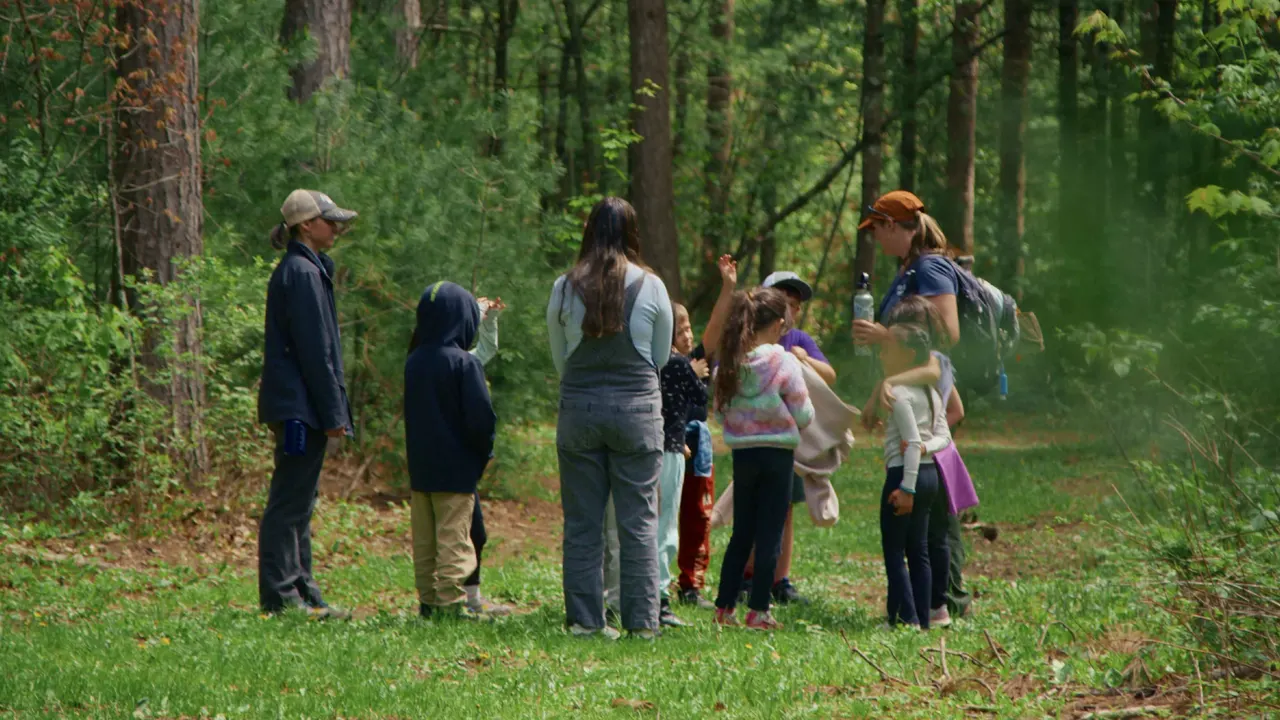
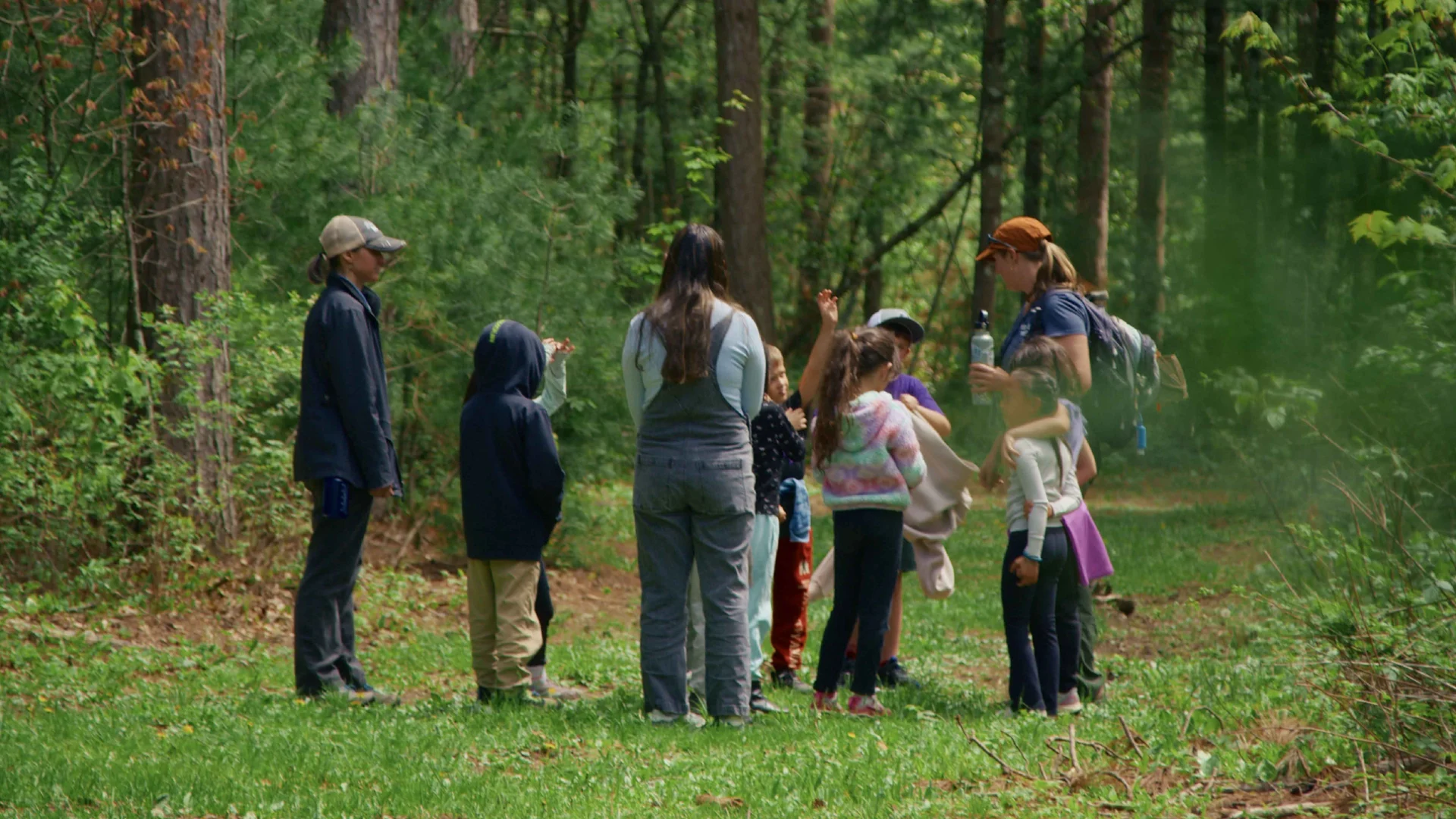
Excited chirps fill the woods, but they are not bird calls. These sounds are coming from the open doors of a school bus, dropping off Stevens Point Area Public School students for their field trip to the Boston School Forest. The students who learn here come from every grade of K–12, each visiting the forest for 12 consecutive years.
Program Leader Karla Lockman says this builds a sense of belonging at the school forest.
“This place becomes very familiar to them, and it's something that they look forward to every year,” she says.
Learning through senses
Today, local 2nd and 7th grade classes are ditching books, computers, and whiteboards for the Land’s old and ever-changing lessons. This familiar forest teaches students through senses. Using sight, sound, and touch is critical to outdoor learning at each age level because it helps students stay engaged with scientific concepts.For example, the second graders visiting the forest spend their day using their senses to learn about life cycles. This looks a little bit like:
- Exploring pond water samples bursting with nymphs and algae
- Taking a guided nature hike to touch blossoms, leaves, and bark
- Listening to bird calls coming from a nest of newly hatched chicks
For 7th grade students, Boston School Forest adapts these concepts to a more advanced curriculum, preparing students in a natural, calm environment for standardized tests and careers and all the learning in between. This looks like:
- Learning archery and measuring the arrow’s velocity during the process
- Climbing 30 feet in the air on a high ropes course to observe the forest from new angles
New Perspectives
The high ropes course gives students the opportunity to see the forest canopy from the perspective of a chickadee or a red squirrel. While students observe, they can connect the living beings around them with biological concepts like producers, consumers, and decomposers. Many outdoor learning activities provide students with new perspectives, offering traditional learning with an unexpected twist.“There was one year where we pretended to be minnows and we actually got to take the course of a minnow…. and it actually helps me learn easier because I can connect it to an experience I've had,” one student said.
Real-time observations of the animals and plants around the students help reinforce classroom lessons about ecosystem functions. And it is very motivating as well.
Lockman says that students are often more inspired to do schoolwork in the forest. They aren’t parroting data from textbooks or computers; they are graphing the birds they see and building a stronger connection between their classmates, education, and the world around them. Of course, it’s a challenge for students to focus on curriculum while they are 30 feet in the air. That is the bonus of outdoor learning: it provides a growth opportunity for students to challenge themselves.
“We saw students on the high ropes course that were very confident, like ... ‘This doesn't phase me a bit.’ And we saw kids that had to work really hard to get out of their comfort zone to overcome this fear with bravery and courage. And we're just so proud of everyone,” Lockman says. The students also support each other as they solve problems together. At the high ropes course, students were heard shouting, “We got you!” and, “You’re doing great.” At the archery range, they can be heard working through velocity calculation problems.
Authenticity
Seeing and breathing nature grounds students in their authentic selves. Problem solving gives them the confidence to test their personal and academic limits.
“It makes me feel very free. I don't feel like I'm stuck in a small room. I can explore my surroundings and be more curious about what I see around me,” a 7th grader said.
Lockman has noticed the calming effect of the woods on the students. She describes that some students who are restless in the classroom are often very good listeners and leaders in the woods.
Outdoor learning activities facilitate positive emotional experiences for students. They experience personal growth by accomplishing challenges like crossing the high ropes course or identifying water bugs. They solve problems with their classmates, and they do it with support from educators who reinforce that success looks different for everyone.
Positive emotions and support help students feel ready to learn. One student described, “If I go outside, I feel happier than if I'm indoors because of the fresh air. If I'm happy, I want to learn."
At its core, outdoor learning is about cultivating space for students to be themselves. Being grounded in the environment, reinforcing academic concepts, and working through problems helps them get there.
“The most memorable parts of the Boston School forest are not going to be, ‘I know the latitude and the longitude, or I know the velocity of my arrow.’ It is, I had a great experience in the outdoors, and I want to do this again,” Lockman says.
See for yourself what makes outdoor learning so magical for students (and staff!) of all ages.
Want to learn more? Check out the introduction to outdoor learning for all kinds of school environments.
WHAT'S NEXT FOR YOUR EDTECH? The right combo of tools & support retains staff and serves students better. We'd love to help. Visit skyward.com/get-started to learn more.

|
Chloe Hansen Edtech Thought Leader |